

If you’re planning to fix holes, cracks, or damaged walls, having the right tools makes drywall repair much easier and more professional-looking. Whether you are a beginner or doing small home fixes, understanding the essential drywall repair tools will save you time, money, and frustration.
In this guide, we’ll cover the most important tools for patching drywall, what each one does, and how to use them properly for smooth, clean results.
Why the Right Drywall Tools Matter
Drywall repair is not just about filling holes — it’s about creating a smooth surface that blends perfectly with the rest of the wall.
Using the wrong tools can lead to:
- Uneven patches
- Visible repair marks
- Cracks reappearing
- Rough or bumpy finishes
But with the right drywall kit tools, even beginners can achieve professional-level results.
Essential Drywall Repair Tools You Need
Below are the most important tools used in almost every drywall repair job.
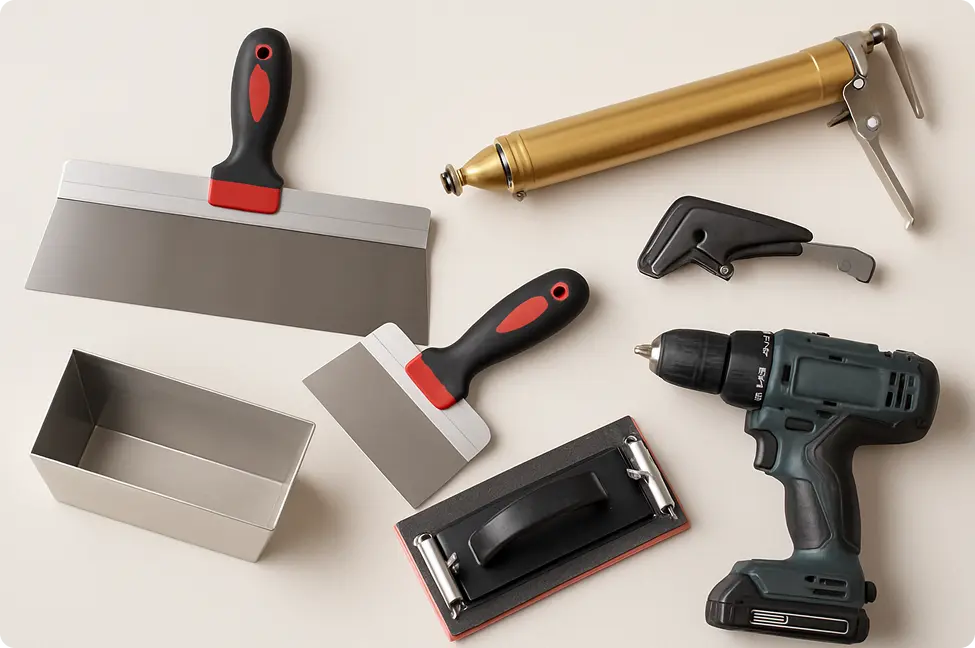
1. Putty Knife (Drywall Knife)
This is the most basic and important tool.
What it does:
- Applies joint compound or spackle
- Smooths patches
- Fills small holes and cracks
Sizes:
- 2–4 inch (small repairs)
- 6–10 inch (larger smoothing work)
✔ A must-have in all drywall repair tools kits
2. Joint Compound (Mud)
This is the material used to fill and smooth damaged areas.
Used for:
- Filling holes
- Covering tape
- Smoothing cracks
- Leveling wall surfaces
There are different types:
- Lightweight compound (easy sanding)
- All-purpose compound (stronger hold)
3. Drywall Sanding Sponge / Sandpaper
Used to smooth the repaired area after drying.
Grit levels:
- 120 grit (initial sanding)
- 220 grit (finishing touch)
✔ Helps blend repairs seamlessly into the wall
4. Drywall Tape
Used for cracks and seams.
Types:
- Paper tape (stronger, professional finish)
- Mesh tape (easy for beginners)
✔ Essential for proper tools for patching drywall
5. Utility Knife
Used for:
- Cutting drywall patches
- Opening cracks slightly
- Removing damaged sections
✔ Important for preparing clean repair edges
6. Drywall Patch Kit (Beginner Friendly)
A drywall kit tool set usually includes:
- Self-adhesive patch
- Putty knife
- Spackle
- Sandpaper
✔ Best option for beginners and DIY homeowners
7. Measuring Tape & Pencil
Used for:
- Measuring repair area
- Marking cutting lines
- Ensuring accurate patch sizes
✔ Helps avoid uneven or oversized patches
8. Drill or Screwdriver
Used for:
- Securing drywall patches
- Installing drywall OR replacement drywall sections
- Fixing wall anchors
9. Dust Mask & Safety Gear
Drywall sanding creates fine dust.
Recommended safety tools:
- Dust mask or respirator
- Safety glasses
- Gloves
✔ Keeps you safe during repair work
Optional Professional Tools (Advanced Use)
These are not required for small DIY repairs but are used by professionals:
- Corner trowel (for sharp edges)
- Mud pan (for holding compound)
- Texture sprayer (for matching wall finishes)
- Drywall saw (for cutting large sections)
Beginner Drywall Repair Kit (Recommended Setup)
If you are just starting, here is a simple drywall repair kit tools list:
✔ Putty knife
✔ Spackle or joint compound
✔ Sandpaper or sanding sponge
✔ Drywall tape
✔ Utility knife
✔ Small patch kit
This is enough to handle:
- Nail holes
- Small cracks
- Minor wall damage
Common Mistakes Beginners Make
Avoid these errors when using drywall tools:
❌ Using too much compound
❌ Skipping sanding
❌ Not using tape on cracks
❌ Rushing drying time
❌ Using wrong knife size
These mistakes often lead to visible or uneven repairs.
When You Need Professional Help
Even with the best tools, some repairs require expert handling:
- Large wall holes
- Water-damaged drywall
- Ceiling repairs
- Repeated cracking issues
- Texture matching problems
In these cases, professional drywall repair ensures a clean, long-lasting finish.
Final Thoughts
For beginners, a simple drywall kit tool set is often enough to handle most small home repairs with confidence.
Read More about Drywall Crack Repair